

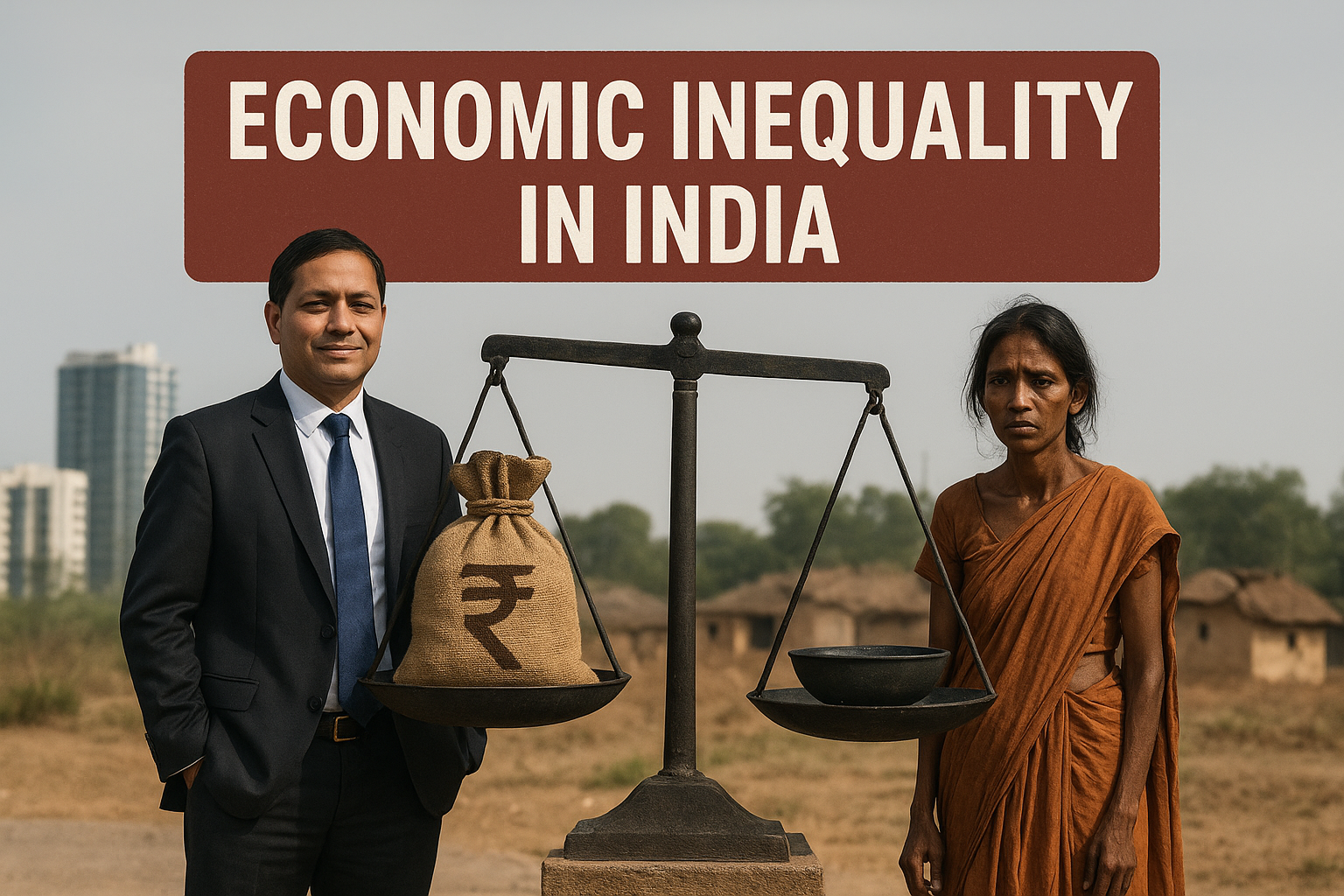
Introduction to Economic Inequality
Economic inequality is no longer a silent issue in India. It’s loud, visible, and deeply woven into everyday life. You can see it when luxury cars pass by crowded buses, or when glittering malls stand a few kilometers away from informal settlements. India is growing fast, but the big question is—who is really benefiting from this growth?
What Is Economic Inequality?
Economic inequality refers to the uneven distribution of income, wealth, and opportunities among people. In simple words, it’s the gap between those who have plenty and those who struggle to meet basic needs. This gap can show up in salaries, savings, property ownership, education access, healthcare, and even digital connectivity.
Why Economic Inequality Matters
Why should we care? Because extreme inequality doesn’t just hurt the poor—it weakens the entire economy. It limits social mobility, fuels frustration, and slows down sustainable growth. A country cannot run smoothly if only a small section enjoys prosperity while the majority remains stuck in survival mode.
Understanding the Current Economic Landscape of India
India’s Economic Growth Story
India is one of the fastest-growing major economies in the world. Strong GDP numbers, booming startups, expanding digital infrastructure, and global investments paint a positive picture. From metros to tier-2 cities, consumption is rising, and new opportunities are emerging.
Growth vs Distribution – The Core Conflict
But here’s the catch: growth is not being distributed evenly. While the economy expands, the benefits flow disproportionately toward the top. This creates a situation where the national income grows, but everyday financial stress for millions does not ease.
Income Inequality in India
Rich-Poor Income Gap
Income inequality in India has widened significantly. Salaries of top executives and professionals have skyrocketed, while wages for low-skilled and informal workers have barely kept pace with inflation.
Top 1% vs Bottom 50%
The top 1% of earners control a massive share of total income, while the bottom 50% struggle with stagnant or declining real incomes. This imbalance means half the population is fighting for a much smaller slice of the economic pie.
Wage Disparities Across Sectors
Workers in technology, finance, and corporate sectors earn many times more than those in agriculture, construction, or domestic work. Skill levels matter, yes—but unequal access to skill development worsens the divide.
Wealth Inequality: The Bigger Concern
Concentration of Wealth
Wealth inequality is even sharper than income inequality. A small number of individuals own a large share of assets such as land, real estate, stocks, and businesses. Wealth creates more wealth, making it harder for others to catch up.
Role of Inherited Wealth
Inheritance plays a major role. Families with wealth pass it down generations, while poor families often pass down debt and limited opportunities. This locks inequality into a cycle that’s hard to break.
Assets vs Income Inequality
Someone may earn a decent salary but own no assets. On the other hand, asset owners benefit from appreciation, dividends, and passive income. This difference quietly but steadily deepens inequality.
Urban–Rural Economic Divide
Income Differences Between Urban and Rural India
Urban areas offer higher-paying jobs, better education, and more healthcare facilities. Rural India, where a large portion of the population lives, depends heavily on agriculture and informal work, which are vulnerable to climate and market shocks.
Access to Infrastructure and Services
Basic infrastructure like quality schools, hospitals, internet connectivity, and transportation is unevenly distributed. This means where you are born often decides how far you can go.
Regional Inequality Across Indian States
Developed vs Less Developed States
States like Maharashtra, Tamil Nadu, Karnataka, and Gujarat attract more investment and jobs, while others lag behind. This imbalance drives migration and strains urban infrastructure.
Role of State Policies
State-level governance, industrial policy, and social spending play a crucial role. Regions with better implementation of welfare and development programs tend to perform better over time.
Education and Economic Inequality
Unequal Access to Quality Education
Private schools and colleges offer better resources, but they are expensive. Government institutions often struggle with infrastructure and teacher shortages, creating a two-tier education system.
Digital Divide and Skill Gap
Online learning and digital skills are essential today, but many students lack devices or stable internet. This digital divide directly translates into future income inequality.
Employment and Informal Sector Challenges
Rise of Informal Employment
A large share of India’s workforce is employed informally, without job security, social protection, or steady income. Informal workers are the first to suffer during economic downturns.
Jobless Growth Phenomenon
Despite economic growth, job creation has not kept pace. Automation, capital-intensive industries, and contract-based work limit stable employment opportunities.
Gender-Based Economic Inequality
Wage Gap Between Men and Women
Women, on average, earn less than men for similar work. This gap widens further in informal sectors and rural areas.
Low Female Workforce Participation
Many women drop out of the workforce due to unpaid care responsibilities, safety concerns, and lack of flexible jobs. This not only affects household income but also national productivity.
Social Inequality and Caste Dynamics
Caste and Economic Opportunity
Historical caste-based disadvantages continue to affect access to education, jobs, and capital. Social discrimination often overlaps with economic inequality.
Intergenerational Poverty
When poverty passes from parents to children, it becomes structural. Breaking this cycle requires long-term investment, not short-term fixes.
Impact of Inflation on Inequality
Rising Cost of Living
Inflation hits low-income households harder because a larger share of their income goes toward essentials like food, fuel, and rent.
Middle Class Under Pressure
The middle class faces rising expenses without proportional income growth, pushing many into financial vulnerability.
Role of Taxation and Government Policies
Progressive vs Regressive Tax System
A progressive tax system can reduce inequality, but indirect taxes often burden the poor more than the rich.
Welfare Schemes and Redistribution
Government schemes related to food security, housing, healthcare, and employment play a critical role in cushioning inequality when implemented effectively.
Impact of COVID-19 on Economic Inequality
Pandemic-Induced Income Loss
The pandemic wiped out livelihoods, especially for informal workers and small businesses, while many high-income professionals remained stable.
Unequal Recovery
Economic recovery has been uneven, with wealthier groups bouncing back faster than the poor.
Technology, Automation, and Inequality
Digital Economy Winners and Losers
Technology creates high-paying jobs for skilled workers but displaces low-skilled labor, widening the income gap.
Future of Work Concerns
Without reskilling and inclusive digital access, automation could intensify inequality in the coming years.
Steps Needed to Reduce Economic Inequality
Policy Reforms
Investment in education, healthcare, progressive taxation, and job creation is essential. Policies must focus on long-term inclusion rather than short-term relief.
Inclusive Growth Strategies
Growth must reach rural areas, women, youth, and marginalized communities. Think of the economy like a ladder—everyone needs a chance to climb, not just a few at the top.
Conclusion: The Road Ahead for India
Economic inequality in India is not just an economic issue—it’s a social challenge with deep consequences. India’s growth story will remain incomplete unless prosperity becomes more evenly shared. Reducing inequality is not about pulling the rich down, but about lifting everyone up. A fairer economy creates stability, opportunity, and dignity for all. The choices made today will shape India’s future for generations.
FAQs
1. What is the main cause of economic inequality in India?
Unequal access to education, employment opportunities, and wealth ownership are the primary causes.
2. Is economic inequality increasing in India?
Yes, both income and wealth inequality have increased over recent years.
3. How does education affect economic inequality?
Quality education improves skills and earning potential, while unequal access deepens inequality.
4. What role does government play in reducing inequality?
Through taxation, welfare schemes, public services, and inclusive growth policies.
5. Can economic growth reduce inequality automatically?
No. Growth must be inclusive and well-distributed to reduce inequality effectively.





Leave a Reply