

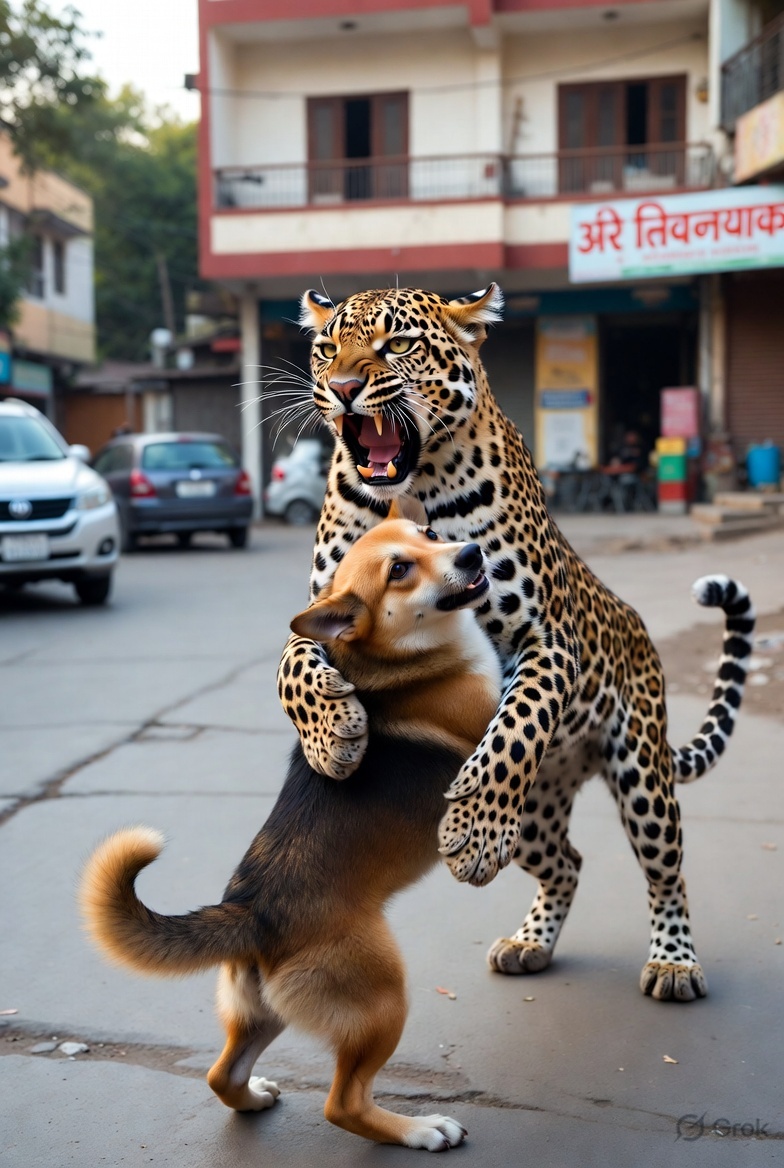
Mumbai is known for its dense population, fast-paced lifestyle, and expanding infrastructure. However, the city is also surrounded by natural forest areas that serve as habitats for many wildlife species. This unusual proximity between urban development and natural ecosystems has created a situation where humans and wild animals sometimes cross paths. In recent years, residents living near hills and forest edges, especially in suburbs like Mulund, have reported more frequent sightings of leopards.
This situation highlights a growing human–wildlife conflict. As the city continues to expand, more buildings, roads, and residential complexes are constructed near forest boundaries. These developments slowly reduce or fragment natural habitats, pushing wildlife to explore nearby areas in search of food and shelter. Leopards, being highly adaptable predators, are among the few wild animals capable of surviving in landscapes influenced by human activity.
Unlike many animals that avoid human settlements completely, leopards can quietly move around urban areas, especially during the night. Their natural stealth, strong hunting skills, and ability to hide make them extremely adaptable predators. Because of this adaptability, they sometimes wander close to residential areas bordering forests or hills.
In places like Mulund, where residential neighborhoods are located near forest patches and hilly terrain, the chances of encountering wildlife are naturally higher. Recently, residents have noticed that the increasing population of street dogs may be attracting leopards from nearby hills. Since these predators are opportunistic hunters, they tend to target prey that is easiest to capture. Unfortunately, stray dogs have become one of the most accessible food sources for leopards living near urban areas.
Sanjay Gandhi National Park and Leopard Population
Leopard Population Growth in the Region
One of the most remarkable aspects of Mumbai’s natural environment is the presence of a large national park within the city limits. This park acts as a crucial green lung for the city and supports a wide range of wildlife species. Among them, the leopard is one of the most well-known predators inhabiting the region.
Wildlife surveys conducted through camera traps have shown that dozens of leopards live in and around the park and its surrounding forest areas. These surveys have recorded adult leopards, cubs, and young animals, indicating that the population is stable and actively breeding. The presence of young cubs suggests that the habitat continues to support a healthy ecosystem.
However, a stable or growing leopard population also means that these animals require more territory to hunt and survive. Leopards are solitary animals that typically maintain their own territories. As young leopards grow, they eventually leave their mother’s territory and search for new areas where they can establish their own range.
Because the forests are surrounded by dense urban development, some leopards naturally begin exploring nearby areas outside the forest boundaries. This movement sometimes brings them close to residential suburbs such as Mulund, Borivali, and Thane. When this happens, residents may occasionally spot a leopard moving through quiet streets or empty plots during late-night hours.
Movement of Leopards Toward Residential Areas
Leopards are known for their ability to adapt to different environments. Unlike larger predators that require vast wilderness areas, leopards can survive even in landscapes influenced by human activity. They use natural cover such as bushes, rocky hills, and drainage areas to move safely without being noticed.
Most of the time, these animals avoid direct interaction with humans. Their movements usually happen late at night when human activity is minimal. During these hours, they may travel from forested hills toward nearby settlements in search of prey.
Food availability plays a major role in determining where leopards choose to roam. If prey animals are abundant near residential areas, the predators may repeatedly return to the same location. In Mumbai’s suburbs, the growing presence of stray dogs has unintentionally created a steady food supply for leopards.
Because of this, areas with higher stray dog populations often experience more leopard sightings. While the animals rarely attack humans, their presence close to homes can create fear and concern among residents.
The Link Between Street Dogs and Leopard Sightings
Stray Dogs as an Easy Food Source
Street dogs are a common sight in many Indian cities. In urban neighborhoods, they survive by scavenging food from garbage bins, street vendors, and leftover food thrown by residents. Over time, groups of stray dogs establish territories around areas where food is easily available.
For predators like leopards, these dogs represent an easy and convenient food source. Unlike wild prey that can be difficult to track and capture, stray dogs are often found sleeping or resting in open spaces. They may gather near garbage dumps, construction sites, or quiet lanes where they feel safe.
Leopards are skilled ambush hunters. They rely on stealth and surprise to capture their prey. A sleeping or distracted dog becomes an easy target for such a predator. In many cases, the leopard can quickly grab the dog and disappear before anyone notices.
Because stray dogs are widespread in urban areas, leopards may develop a pattern of visiting certain neighborhoods regularly. Once they learn that dogs are available there, they may return repeatedly to hunt.
Why Leopards Prefer Dogs Over Wild Prey
From an energy perspective, predators prefer prey that requires the least effort to catch. In forests, leopards typically hunt animals such as deer, monkeys, or wild pigs. These animals are fast and alert, making them harder to capture.
Street dogs, however, are usually slower and less cautious. Many dogs rest in open areas without expecting danger. This makes them highly vulnerable to ambush attacks by predators.
There are several reasons why stray dogs become attractive prey for leopards:
- They are abundant near residential areas.
- They often move around at night.
- They sleep in open locations without protection.
- They are easier to capture compared to wild animals.
When leopards find such easy prey, they may gradually shift their hunting behavior toward these animals. As a result, neighborhoods with larger stray dog populations tend to experience more leopard visits.
Rising Number of Street Dogs in Mulund
Residents Reporting Increased Stray Dog Population
In recent years, many residents in Mulund have noticed a steady rise in the number of stray dogs roaming their neighborhoods. Groups of dogs can often be seen near garbage areas, parking lots, construction sites, and empty land plots.
Some residents feed these dogs regularly out of kindness, which helps the animals survive but can also contribute to population growth. Without proper sterilization programs, stray dogs reproduce quickly, leading to larger packs over time.
When the population increases, dogs begin occupying more territory and gathering in larger numbers. These groups often remain active at night, barking or moving around the streets. For leopards searching for prey, such areas become attractive hunting grounds.
The presence of many stray dogs near residential buildings can therefore indirectly increase the chances of leopards visiting those areas.
Garbage and Food Waste Attracting Dogs
Improper garbage disposal is another important factor contributing to the rise in stray dog numbers. Food waste thrown into open bins or dumped in vacant areas becomes an easy food source for animals.
Dogs quickly learn where food is available and gather in those locations. Once they find a reliable source of food, they tend to stay in the same area permanently. Over time, this leads to a concentration of dogs in certain neighborhoods.
This situation creates a chain reaction. Garbage attracts dogs, and dogs attract predators such as leopards. If waste management is not properly handled, the cycle continues and may eventually increase wildlife encounters.
Keeping surroundings clean and reducing open food waste can significantly help control this problem.
Recent Leopard Incident in Mulund Area
What Happened During the Leopard Attack
Mulund has experienced several leopard sightings and occasional incidents over the years. In one such incident, a leopard entered a residential area and attacked multiple people during the confusion that followed. The animal had likely wandered into the neighborhood while searching for prey, possibly attracted by stray dogs or other animals.
When residents noticed the leopard, panic spread quickly. Some people attempted to chase the animal away, which may have made the situation more dangerous. Leopards usually avoid humans, but when frightened or surrounded, they may attack in self-defense.
The incident left several individuals injured before authorities were able to intervene. Situations like this highlight how unpredictable wildlife encounters can become when animals enter crowded urban environments.
In another reported case, a man who tried to protect his pet dog from a leopard was attacked and injured. Such incidents demonstrate how pets and stray animals can sometimes become the main target, with humans getting hurt when they attempt to intervene.
How Authorities Responded
Whenever such incidents occur, forest officials and rescue teams respond quickly. They usually monitor the area, set up traps or cameras, and attempt to safely capture the animal if necessary. In many cases, the leopard is tranquilized and relocated back to a forested region.
Authorities also advise residents to remain calm and avoid crowding the animal if it is spotted. Panic and large crowds can provoke a frightened leopard to act aggressively.
Public awareness programs are often conducted to educate people about how to behave if they encounter wildlife. Understanding leopard behavior and taking precautionary measures can help prevent dangerous situations.
Safety Concerns for Residents Near Hills
Night-time Leopard Movement in Urban Areas
Leopards are primarily nocturnal animals, meaning they are most active during the night. They typically begin moving after sunset and continue hunting until early morning hours. During this time, quiet streets and dim lighting provide ideal conditions for them to travel unnoticed.
Residents living near hills or forest edges may unknowingly share their surroundings with these predators during the night. Leopards can move through gardens, empty plots, and narrow lanes without attracting attention.
Because of this behavior, it is generally advised that people avoid walking alone in poorly lit areas late at night in regions close to forests. Keeping surroundings well-lit and staying alert can reduce the chances of unexpected encounters.
Impact on Pets and Street Animals
Pets and stray animals are often the primary targets for leopards entering urban areas. Small dogs and cats are especially vulnerable because they are easier to capture.
Pet owners living near forest boundaries should avoid leaving their animals outside unattended during the night. Keeping pets indoors or in secure enclosures can greatly reduce risk.
Street dogs, unfortunately, remain the most exposed. Their presence in large numbers often draws predators closer to human settlements.
How Authorities and Communities Can Reduce Conflicts
Controlling the Stray Dog Population
One of the most effective ways to reduce leopard visits is by managing the stray dog population. Sterilization and vaccination programs help control breeding and gradually stabilize the number of dogs in an area.
Municipal authorities and animal welfare organizations often work together to implement such programs. When done consistently, these efforts can significantly reduce the number of stray animals over time.
Waste Management and Awareness
Proper waste management plays an equally important role. Ensuring that garbage bins are closed, food waste is properly disposed of, and public areas are kept clean can reduce the attraction for stray animals.
Communities can also organize awareness programs to educate residents about wildlife safety and responsible waste disposal. Small actions by individuals can collectively make neighborhoods safer for both humans and animals.
Coexisting with Leopards in Urban Mumbai
Mumbai is one of the rare cities in the world where large predators live close to millions of people. While this may sound alarming, it also reflects the resilience of wildlife and the importance of preserving natural habitats.
Leopards generally avoid humans and prefer to stay hidden. Most conflicts occur because of misunderstandings, panic, or situations where animals feel threatened. By understanding leopard behavior and addressing the factors that attract them—such as stray dog populations and food waste—communities can reduce risks.
Coexistence with wildlife requires awareness, responsibility, and cooperation between residents and authorities. When these efforts come together, it becomes possible for humans and wildlife to share the same landscape safely.
Conclusion
The increasing number of stray dogs in areas like Mulund has unintentionally created a new challenge for urban communities. These dogs often attract leopards from nearby hills and forest regions because they provide an easy and reliable source of food. As a result, leopard sightings in residential neighborhoods have become more frequent.
Addressing the root causes of this issue is essential. Managing stray dog populations, improving garbage disposal systems, and spreading public awareness can significantly reduce the chances of wildlife entering urban spaces.
At the same time, it is important to remember that leopards are an essential part of the ecosystem. Learning how to coexist safely with wildlife is a responsibility shared by both authorities and residents. With the right precautions and community efforts, it is possible to maintain harmony between urban life and the natural environment.
FAQs
1. Why are leopards coming near residential areas in Mulund?
Leopards are often attracted by easy prey such as stray dogs and other animals found near residential areas close to forests or hills.
2. Are leopard attacks on humans common?
Leopard attacks on humans are relatively rare. Most leopards avoid humans and only attack when they feel threatened or cornered.
3. Why do stray dogs attract leopards?
Stray dogs are easier to hunt compared to wild animals. Their presence in large numbers near residential areas makes them a convenient food source for predators.
4. What should residents do if they see a leopard?
Residents should stay calm, avoid approaching the animal, move to a safe location, and inform forest authorities immediately.
5. How can communities reduce leopard sightings?
Improving waste management, controlling stray dog populations through sterilization programs, and spreading awareness about wildlife safety can help reduce encounters.













B_kmsl
Если вы сейчас разбираетесь с SEO, советую глянуть [url=https://seoblog360.ru/]практический SEO-блог[/url] — там много гайдов по выбору ниши, контенту и продвижению.