

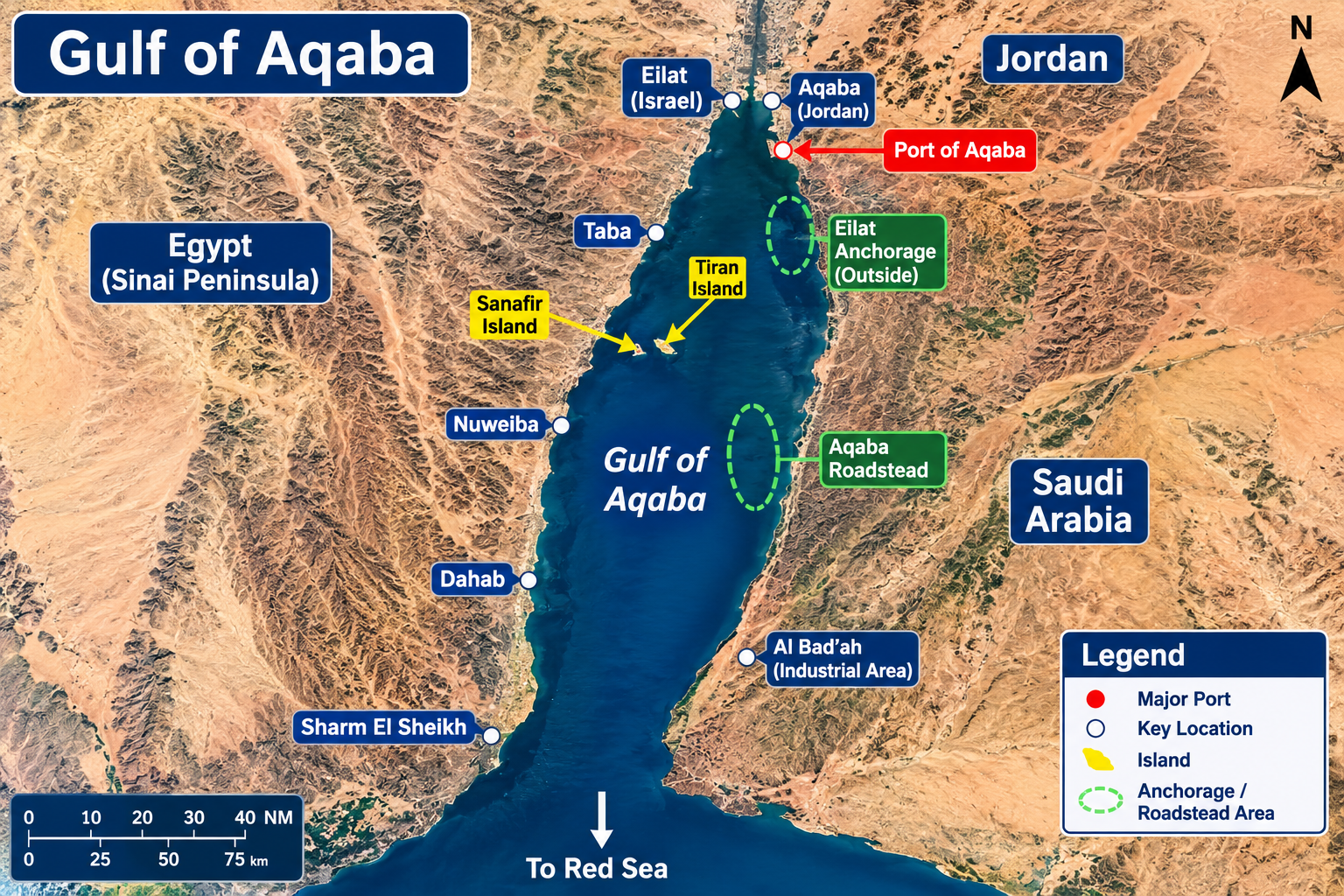
The Gulf of Aqaba is a narrow, deep stretch of water at the northern end of the Red Sea. It is small on the map, but it matters far more than its size suggests. It is Jordan’s only route to the sea, it is surrounded by four countries, and its entrance has been at the centre of major regional conflicts.
The gulf lies east of the Sinai Peninsula and west of the Arabian Peninsula, and its shores belong to Egypt, Israel, Jordan and Saudi Arabia. It is also called the Gulf of Eilat. Sources give slightly different lengths, from about 160 km to nearly 190 km, and it is at most about 24 km wide. Its main settlements are Aqaba, Eilat, Taba, Haql and Sharm El Sheikh.
The gulf is part of a major fault system called the Dead Sea Rift, where the earth’s crust is slowly pulling apart. This is why the gulf is so deep, reaching a maximum depth of 1,850 metres, with an average of around 800 metres. For exam students, this is a good example of how tectonic activity shapes water bodies.
1. A Lifeline for Jordan
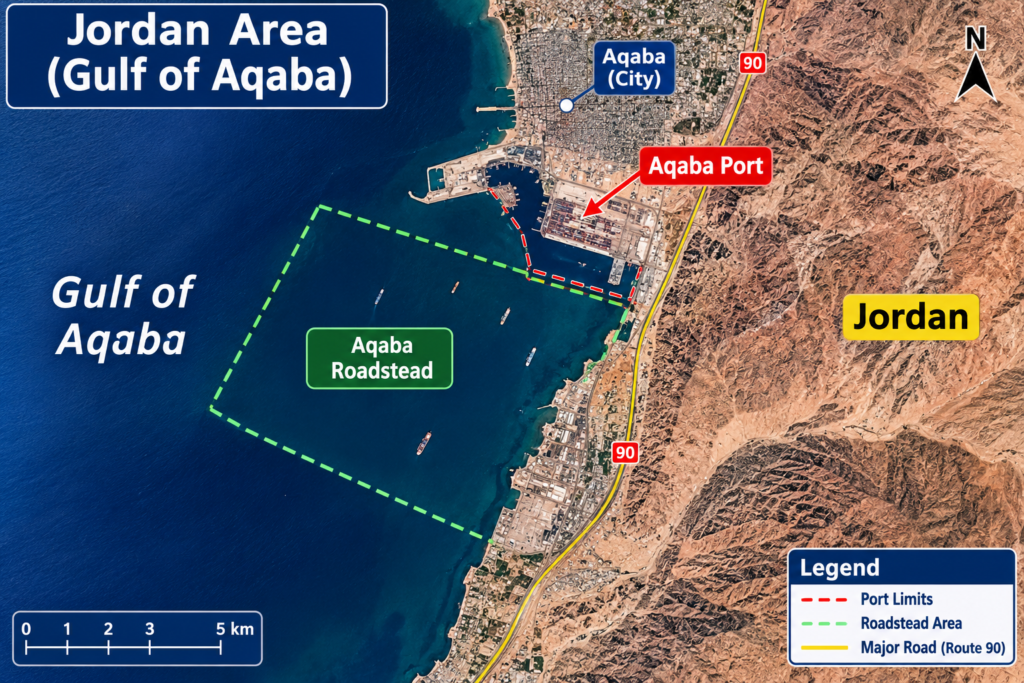
Aqaba Port is Jordan’s only access to the sea. Jordan’s coastline is very short, but the port handles imports, exports and transit goods for the country. Without it, Jordan would depend entirely on its neighbours’ ports. This is why the Aqaba Special Economic Zone, a tax-friendly area for industry and logistics, is important to Jordan’s economy.
2. Gateway for Trade Between Asia, Africa and Europe
Ships using the ports of Aqaba and Eilat can reach the Red Sea, the Indian Ocean and Asian markets without going through the Suez Canal or the Mediterranean. Governments in the region have proposed plans to turn the area into a logistics gateway linking Asia, Europe and Africa, including links between Red Sea and Mediterranean ports. Whether these plans move forward depends on regional politics and security.
3. The Strategic Strait of Tiran
The gulf connects to the Red Sea through the Strait of Tiran. It is about six kilometres wide, and large ships use two deep channels on the Egyptian side to reach ports in Jordan and Israel. Because ships must pass through this narrow entrance, control of it has mattered in history. It was an important factor in the Suez Crisis of 1956 and the Six-Day War of 1967. This is a classic example of a “chokepoint”, a narrow passage that can control the flow of trade.
4. Coral Reefs and Marine Life
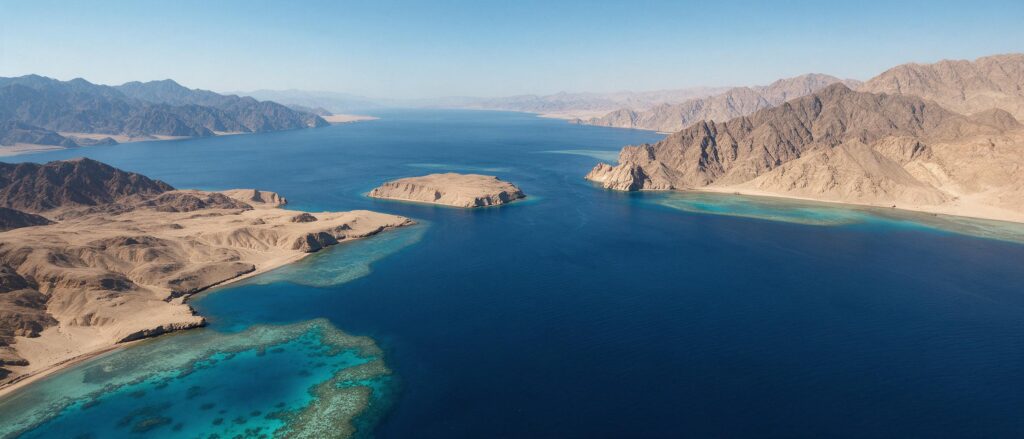
The gulf is famous for its coral reefs. The northernmost coral reef in the world is near the Eilat shore. The reefs here have drawn scientists because they survive in warm water, which makes them important for studying climate change and coral protection. Divers and snorkellers visit from around the world.
5. Tourism and Resorts
Warm water, clear visibility and desert scenery make the gulf a popular holiday region. The cities at its northern end have commercial ports and well-known resorts. Tourism supports local jobs in Aqaba, Eilat, Taba and Sharm El Sheikh. The Egyptian coast alone stretches about 170 km between Taba and the Strait of Tiran, which is why it has so many resort towns.
6. Environmental Challenges
Heavy port traffic, oil shipping, coastal construction and tourism put pressure on a small and delicate sea. A fuel spill or large accident could harm reefs that took thousands of years to grow. Because four countries share the water, protecting it needs cooperation.
Conclusion
The Gulf of Aqaba is small, but it combines trade, strategy, tourism and rare marine life in one narrow sea. For Jordan it is a lifeline, for the region it is a strategic gateway, and for the world it is a valuable reef ecosystem to protect.







Leave a Reply